How Radon Testing Services Protect Your Home and Health in St. Louis
When I bought my first home in St. Louis a few years ago, the real estate disclosure mentioned something about radon. I remember skimming the form, signing it, and moving on. It was only after a friend who worked in environmental health asked about my test results that I realized I had never actually had the place tested. That was a mistake, and one I see a lot of homeowners make. Radon gas is not something you can see or smell, and it does not announce itself. But the science is clear: prolonged exposure to elevated radon levels is the second leading cause of lung cancer in the United States, according to the EPA. The good news is that testing is straightforward, and if the numbers come back high, radon mitigation can bring those levels down to something safe.
In this area, the geology works against us. St. Louis sits on soil and rock formations that contain varying amounts of uranium. As that uranium decays, it releases radon gas, which seeps up through the ground and into homes through cracks in the foundation, gaps around pipes, and sump openings. It can collect in basements and lower floors, sometimes reaching levels that the EPA considers actionable. That is why professional radon testing services have become a standard part of home inspections and real estate transactions here. They are not just a box to check. They give you a real number, a measurement of the radon level in your living space, so you know exactly what you are dealing with.
What a Professional Radon Test Actually Involves
There is a difference between picking up a $15 test kit at the hardware store and hiring a qualified team. Both methods can give you a reading, but the reliability depends on how carefully the test is placed, how long it runs, and whether the conditions in the home are stable during the test. A short-term radon test typically lasts between two and seven days. The device, often a charcoal canister or an alpha-track detector, is placed in the lowest lived-in level of the house. You have to keep windows and doors closed as much as possible, avoid running fans that pull air from outside, and maintain normal heating and cooling. It sounds simple, but I have seen homeowners accidentally invalidate a test by leaving a basement window open overnight.
Certified radon testing services handle these variables. The technician knows where to place the device, how many to use, and how to document the conditions. In some cases, they use a continuous radon monitor, which takes readings every hour or so and records fluctuations. That can be especially useful if you suspect that radon levels vary with weather changes or with the operation of your HVAC system. A continuous radon monitor gives a time-averaged result that is harder to cheat or accidentally skew. For a more complete picture, a long-term radon test runs for ninety days or more. That is the gold standard for understanding your actual annual exposure, because radon levels can change seasonally. But in a real estate transaction, you rarely have that kind of time, so a short-term test is the practical choice.
Reading the Results and Deciding What to Do
The EPA recommends action when the radon level reaches 4.0 picocuries per liter (pCi/L) or higher. That is not a safety threshold in the sense that everything below it is harmless. It is an action guideline. The EPA also suggests considering mitigation for levels between 2.0 and 4.0 pCi/L. In my experience, a lot of homeowners in St. Louis are surprised to learn that their test came back above 4.0. The local geology means that elevated results are not rare. If your test shows a high number, do not panic. Radon reduction is a well-established field, and a good mitigation contractor can usually bring those levels down to below 2.0 pCi/L.
The most common and effective technique is sub-slab depressurization, a form of soil suction. A contractor drills a small hole through the basement floor, digs a pit beneath the slab, and installs a pipe that runs up through the wall and out the roof. A radon fan, mounted in the attic or outside, creates a vacuum under the slab, pulling radon gas away from the house and venting it safely above the roofline. It is a clean installation that usually costs between $800 and $2,500, depending on the complexity of the foundation and the number of suction points needed. After the system is in place, the contractor performs post-installation verification, which is another radon test to confirm that the levels have dropped. That step is critical. You want to know that the system actually works, not just that it was installed.
I recommend that anyone buying a home in St. Louis include a radon contingency in their offer. That way, if the test comes back high, you can negotiate for the seller to cover mitigation or adjust the price. Many home inspectors offer radon testing as an add-on, but I have found that dedicated radon testing services are more thorough. They focus on this one thing, and they have the best equipment and protocols. They also know the local soil conditions and can give you context for your specific neighborhood.
Why You Should Not Skip the Post-Mitigation Test
I have seen cases where a homeowner paid for radon system installation but never followed up with a test. They assumed that because the fan was running, the radon was gone. That is not always true. The fan could be undersized, the suction point could be in the wrong location, or there could be a second entry route that the system does not address. Post-installation verification is the only way to be sure. The EPA recommends testing at least every two years after mitigation, because the soil can shift, the foundation can crack, and the fan can wear out. Some continuous radon monitors can be left in place year-round to give ongoing readings. That is overkill for most people, but for those with a history of high levels or a particular sensitivity, it provides peace of mind.
One thing that catches some homeowners off guard is the real estate disclosure requirement. In Missouri, sellers are required to disclose known radon levels to potential buyers. If you have never tested, you can honestly say that you do not know. But once you test, you have a number, and you have to share it. That can feel uncomfortable if the number is high, but remember that high levels are fixable. A home with a mitigation system and a clean post-installation verification is actually a safer home than one that has never been tested. Many buyers see a documented mitigation system as a positive, because it means the problem has been addressed professionally.
How Air Sense Environmental Approaches the Process
I have worked with Air Sense Environmental on several projects in the St. Louis area, and I appreciate their straightforward approach. They start with a thorough radon test, using either short-term or long-term methods depending on the situation. If the results call for mitigation, they design a system specific to that house. They do not use a one-size-fits-all solution. The team at Air Sense Environmental considers the foundation type, the soil composition, and the layout of the home before deciding on the number of suction points and the size of the radon fan. After installation, they always come back for post-installation verification. That final test is what separates a professional job from a quick fix.
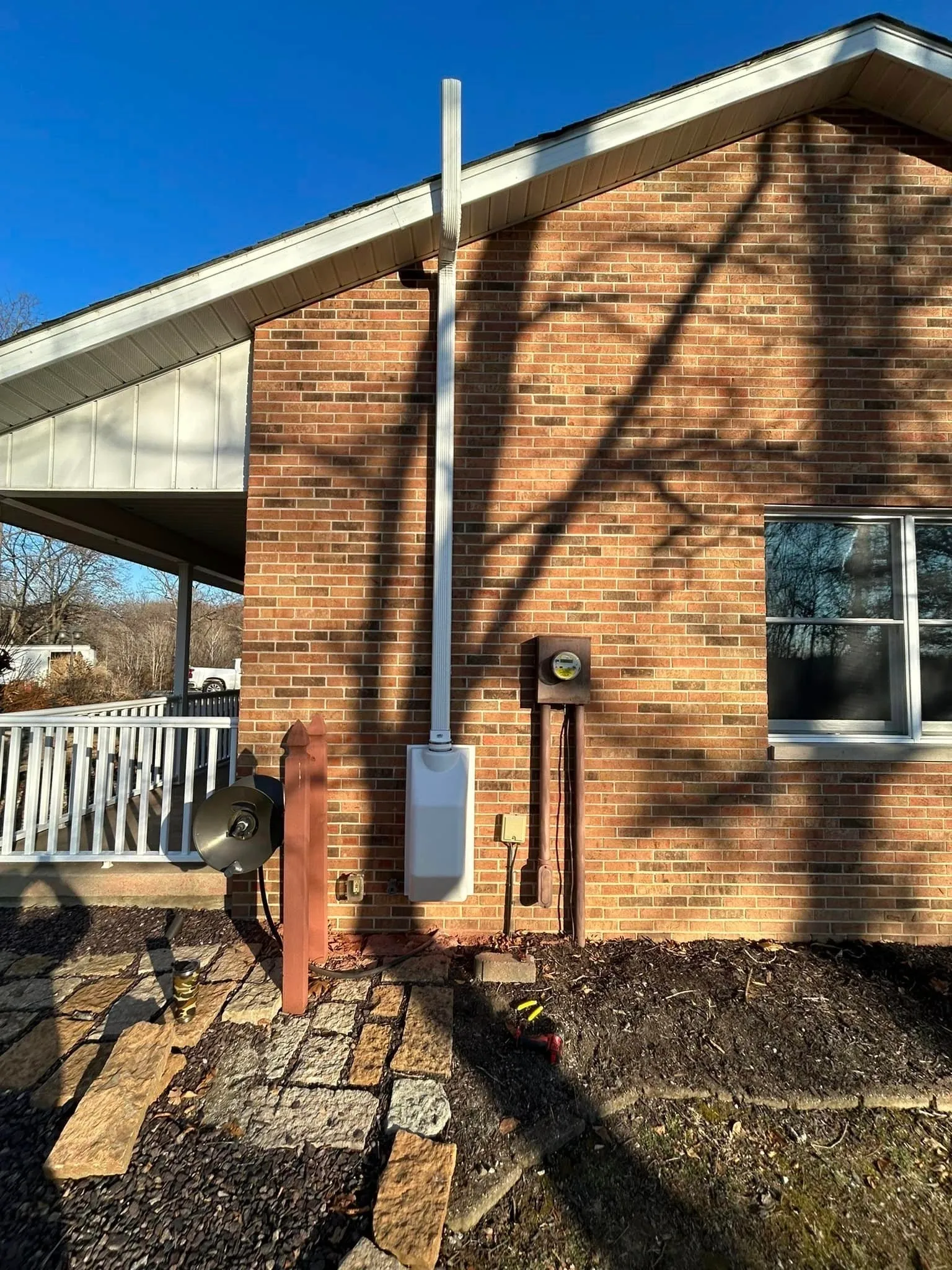
Their radon testing services are available to homeowners, real estate agents, and home buyers. They also offer advice on how to maintain your system over time. For instance, the radon fan has a lifespan of about five to ten years, and it should be checked periodically for debris or wear. The pipe connections should be sealed, and the system should be re-tested after any major renovation or foundation work. These are small steps, but they matter.
A Few Practical Tips for Homeowners
If you are planning to test your home, here are some things I have learned that can help you get an accurate result:
- Keep windows and doors closed for at least twelve hours before the test begins and throughout the entire test period.
- Do not operate whole-house fans or window-unit air conditioners during the test. Standard central HVAC is fine.
- Place the test device in the lowest room you regularly use, at least twenty inches above the floor and away from drafts, heat sources, and exterior walls.
- If you are using a short-term test, do not move the device or open the house during the test period. Even a brief airing out can throw off the reading.
These guidelines come from the EPA and from years of field experience. They are not complicated, but they are easy to ignore if you are in a hurry. Taking the time to follow them saves you from getting a false low reading and discovering later that your actual radon level is unsafe.
The Real Cost of Ignoring Radon
The health effects of radon are not immediate. You do not get sick the way you would from carbon monoxide. Instead, radon exposure builds up over years. The EPA estimates that radon causes about 21,000 lung cancer deaths per year in the United States. That number puts it right up there with secondhand smoke and far above other environmental hazards. The lung cancer risk from radon is especially high for smokers, but non-smokers are also vulnerable. The dose matters, and the only way to know your dose is to measure it.
I have had clients tell me that they did not want to test because they were afraid of what they might find. That is understandable, but it is also backward. Not knowing does not protect you. It just delays the decision. The cost of a professional radon test is small compared to the cost of mitigation, and mitigation is small compared to the cost of a health problem that could have been prevented. In St. Louis, where the geology is what it is, testing is not just a good idea. It is a responsible step for anyone who lives in a house with a basement or a slab-on-grade foundation.
Radon testing services have become more accessible over the past decade. You can find them through environmental consulting firms, through some home inspection companies, and through specialized mitigation contractors like Air Sense Environmental. The key is to choose someone who follows the EPA protocol, uses calibrated equipment, and provides a written report. A good test gives you a number you can trust. From there, you can make an informed decision about radon mitigation if you need it. And if your levels are low, you can sleep easier knowing that your home is not silently putting your family at risk.